What Does the U.S. Government Shutdown Mean and How Does It Impact Mexico?
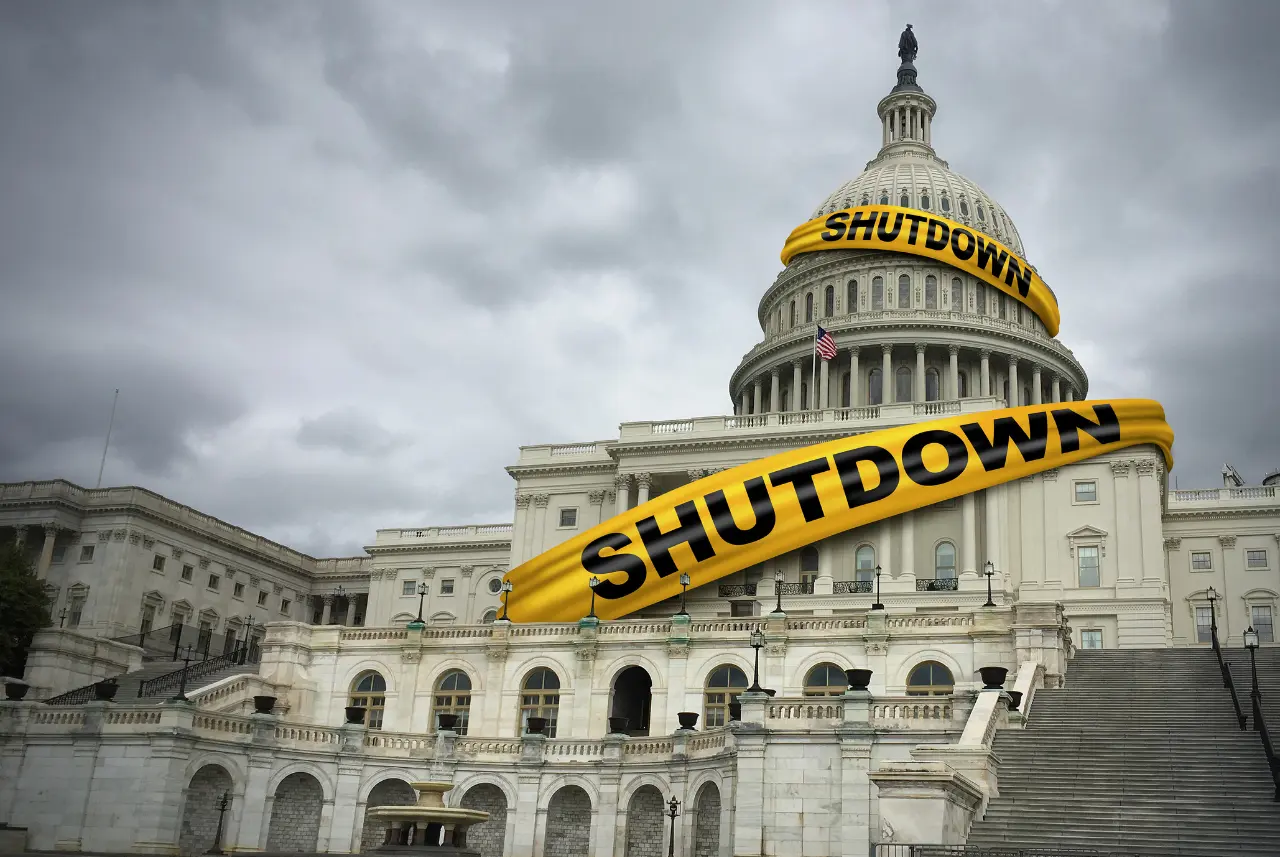
On October 1, 2025, the United States entered a partial federal government shutdown after Congress and the White House failed to reach an agreement to approve the budget for the new fiscal year.
This phenomenon, known as a government shutdown, entails the suspension of most non-essential government functions and affects both public employees and the broader economy.
According to the Committee for a Responsible Federal Budget (CRFB), more than one million federal workers could temporarily stop receiving paychecks, while thousands of programs and procedures will be suspended.
Within the United States, the effects are immediate. Services such as the issuing of passports, access to national parks, small business loans, and several social programs will come to a halt. Agencies like the Federal Aviation Administration (FAA) have already announced the suspension of over 11,000 employees, although air traffic controllers will continue working without pay until the crisis ends. The Federal Trade Commission (FTC) has stopped processing fraud and identity theft complaints, and even the Cybersecurity and Infrastructure Security Agency (CISA) has cut back operations, increasing risks to critical infrastructure.
The economic cost is equally significant. The shutdown could represent up to $15 billion in weekly losses to U.S. GDP, according to White House estimates. For perspective, the 2018–2019 shutdown cost around $11 billion, according to the Congressional Budget Office.
Although the shutdown is primarily a domestic U.S. issue, Mexico could be affected on several fronts. Delays in U.S. passports and visas will impact travelers and migrants. Economic uncertainty could pressure the exchange rate and affect Mexican exports to its main trading partner. Tourism could also suffer if border services or operations at U.S. national parks and tourist sites are reduced. Similarly, some binational cooperation projects on security, environment, and migration could slow down due to lack of operational funding.
So far, Mexico’s Ministry of Foreign Relations (SRE) has not issued an official statement. However, experts warn that the shutdown could complicate the bilateral agenda on security and migration, especially at the border. Meanwhile, financial specialists caution that if the shutdown drags on, it could increase market volatility and put pressure on the Mexican peso, as has happened in previous shutdowns.
Related: Mexico, U.S., and Canada Coordinate Public Consultations Ahead of USMCA Review: Sheinbaum
More from Economy
All stories →
Mexico Senate raises 2027 tourist entry fee to 1,158 pesos
Mexico's Senate approved a 17.8% rise in the foreign tourist fee to 1,158 pesos for 2027, part of a budget package allowing 1.7 trillion pesos in borrowing.

Grupo México plans $4 billion to $6 billion expansion at US copper unit Asarco
Grupo México will invest $4 billion to $6 billion over three years to expand Asarco's Arizona copper mines and restart the Hayden smelter and refinery.
The investment that anticipates growth
A 9% increase in investment says more than the figure suggests. In economics, some indicators describe what has already happened and others anticipate what is to come; investment belongs to the second group and is the best indicator of sustained growth.