50 dinosaur footprints from 65 million years ago found in Michoacán
At least 50 fossilized dinosaur footprints have been identified in San Juan de los Plátanos, a community in the municipality of Apatzingán, in Michoacán, a state in western Mexico; the traces are approximately 65 million years old.
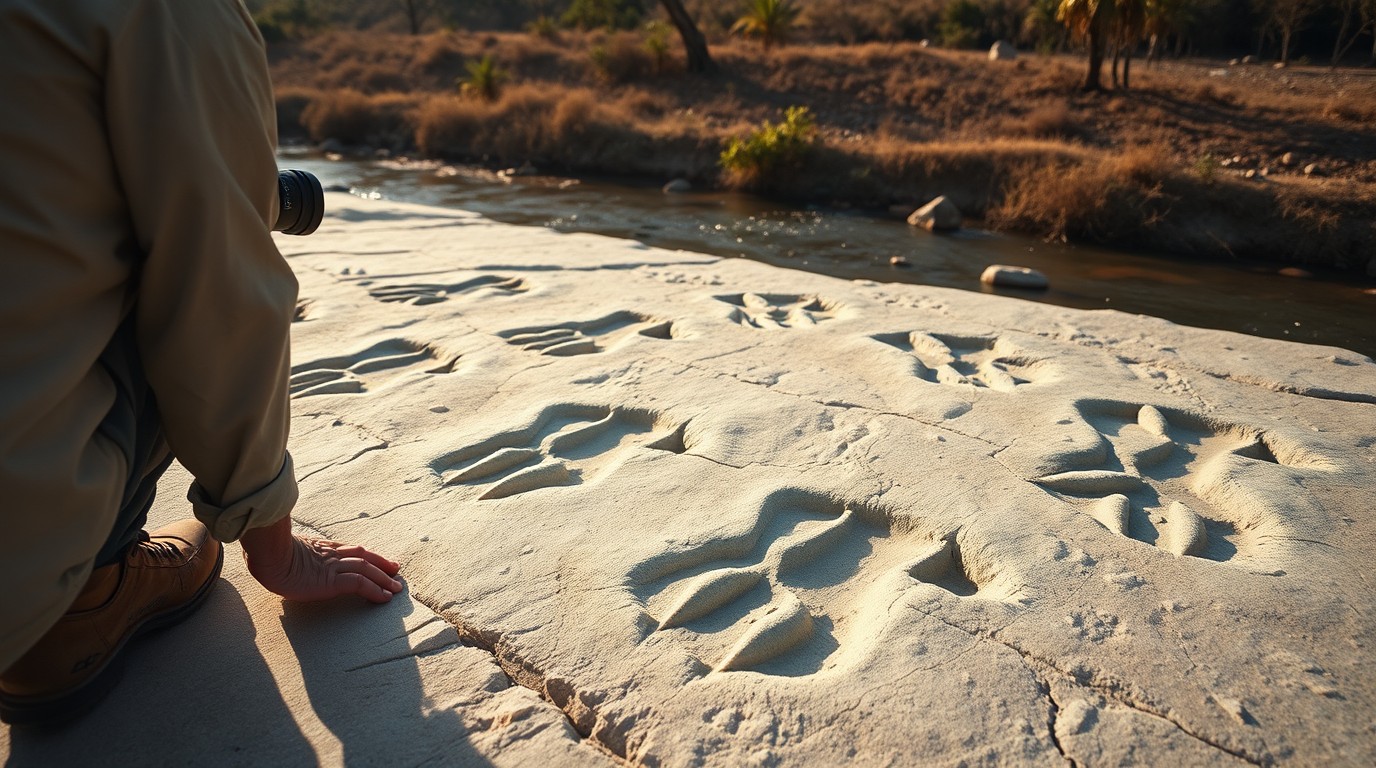
The find was confirmed by specialists from the National Institute of Anthropology and History (INAH), the federal body that researches and protects the country's archaeological, historical and paleontological heritage; the marks were impressed in sedimentary rock alongside a stream bed and are fossil traces, not dinosaur bones.
Residents of the community alerted INAH after finding what they described as footprints of "giant animals"; the researcher Raymundo Cervantes Barriga visited the site and determined that they belong to herbivorous and carnivorous dinosaurs of different sizes.
The footprints so far cover about 40 square meters and measure between 12 and 48 centimeters in length, with a width of up to 30 centimeters; the team has yet to survey other areas, so the number of traces could increase.
The identification is preliminary, but it points to three groups: large carnivorous theropods, possibly tyrannosaurids; smaller dinosaurs similar to raptors, and duck-billed herbivores known as hadrosaurs.
According to the specialists, these animals lived during the Late Cretaceous, a period that ended about 66 million years ago; at that time, the region may have had bodies of water that the dinosaurs approached to feed.
The set of footprints could yield information about how the animals walked, in which direction they moved and whether different species coincided in the area; since October 21, an INAH team has been working to document the site through rock analysis, photogrammetry and the making of molds.
Apatzingán would be the fourth location in Michoacán with dinosaur footprints, after Playa Azul, in Lázaro Cárdenas; El Aguaje, in Aguililla, and the area between Tiquicheo and Tuzantla; in Mexico there are just over 30 sites with this type of trace registered with INAH.
Mexico's secretary of culture, Claudia Curiel de Icaza, recognized the residents who reported the discovery and said that INAH will study and protect the site; the specialists also stressed that the find can bring communities, particularly girls and boys, closer to the region's natural past.
More from Culture
All stories →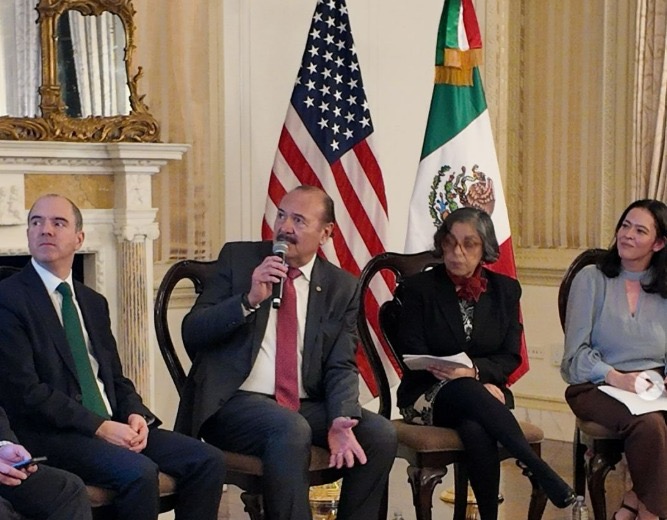
Mexico and New York Look to the Future from Two Centuries of Consular History
The Consulate General of Mexico in New York marked its 200th anniversary with a panel discussion on the history and prospects of the economic and cultural relationship between Mexico and the Big Apple, held in collaboration with Americas Society/Council of the Americas (AS/COA).

Mexican Foreign Service accepts Indigenous languages for the first time to strengthen consular services in the United States
The Ministry of Foreign Affairs (SRE) opened the Mexican Foreign Service entrance competition for the first time to those who speak an Indigenous language, in order to strengthen support for Mexican nationals in the United States, where close to 40 million people of Mexican origin live, according to the EFE news agency.

"A feminine ritual": Pollen confronts grief at WOMB Mexico
The work of Erawa and Joui is seed and womb of powerful artistic experiences